Can AI help call-center agents sound clearer without changing who they are?
Accent Changer Team
Yes — with the right goal and the right workflow. Call centers usually do not want agents to sound like a different person. They want clearer English, consistent pronunciation for customers, and agents who still feel authentic on the line. That is an accent and clarity problem, not a "replace this voice with a narrator" problem.
The technology that fits best depends on whether you are training agents, QA-ing calls, or trying to modify live customer conversations.
What "clearer without changing who they are" means
Operations and L&D teams often mean:
- Intelligibility — customers understand key words on the first try
- Consistency — greetings, disclosures, and troubleshooting steps sound professional
- Identity — the same agent Tim or Priya, not a synthetic stand-in
- Confidence — agents are not embarrassed by how they sound on playback
Speech-to-speech accent conversion targets pronunciation and intonation while trying to preserve timbre and delivery — the same principle as change accent and keep your voice. That is different from dropping in TTS or a celebrity-style voice clone.
Live accent AI on agent calls: promise and pitfalls
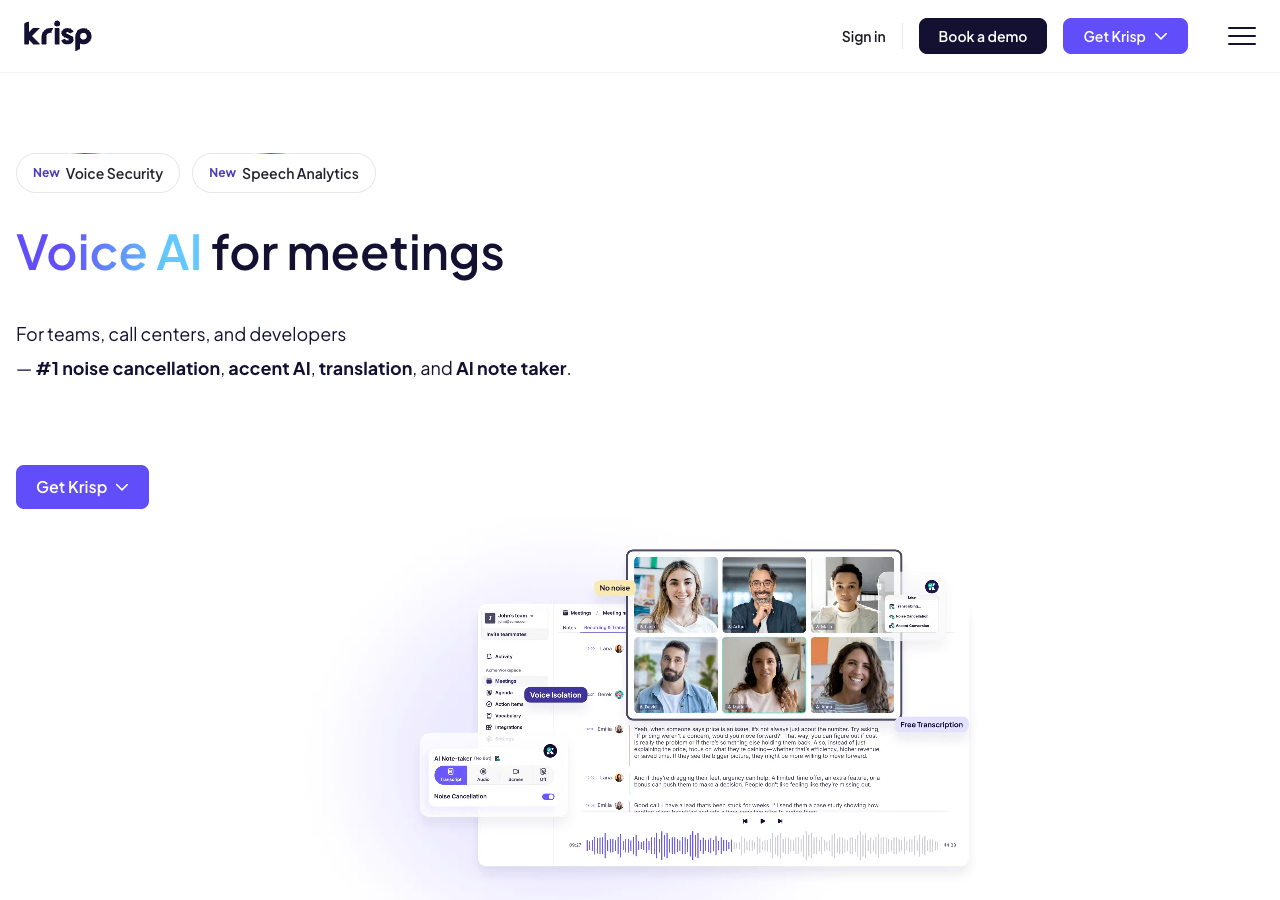
Some vendors pitch real-time accent softening on live customer calls. Products like Krisp route microphone audio through a low-latency pipeline before it reaches the dialer — a different category from file-based converters.
Potential benefits:
- Immediate clarity for listeners used to a different English variety
- Less friction than months of traditional accent coaching alone
Risks teams should weigh:
- Latency and robotic tone on busy floors (see will accent conversion sound robotic?)
- Agent trust — "the company is fixing my voice" can land badly without clear policy
- Compliance — recording disclosure, data retention, and regional labor rules
- Double processing — contact-center softphones plus accent layers plus noise gates
Live pilots need explicit agent consent, A/B testing, and an off switch.
Where post-production fits call-center programs
Most training and quality workflows already use recordings, not live filters:
| Use case | Post-production accent AI |
|---|---|
| Onboarding listen-and-repeat | Convert model phrases; agents compare to their take |
| QA coaching | Anonymized clips show "how this script could sound clearer" |
| e-learning modules | One agent recording → multiple regional training versions |
| Recruitment demos | Candidates hear themselves with target pronunciation |
This is not live call conversion. It is coaching material built from files — faster to roll out and easier to review with legal and HR.
accentchanger.com fits here: upload a short agent recording or training script audio, choose a target accent profile, preview, and download. It does not sit inside your dialer as a live Zoom-style filter. For many centers, that is a feature — you approve content before agents hear it.
Pair converted samples with human coaching from your accent reduction program. AI shows the target; coaches work on breath, pace, and confidence.
A sensible rollout pattern
- Define success — fewer repeat questions? Higher CSAT? Shorter handle time? Pick one metric.
- Start offline — convert training clips; let agents react in a safe room
- Measure identity — do agents say the output still sounds like them?
- Pilot live only if needed — and only after offline quality is acceptable
- Keep humans in the loop — AI assists clarity; managers own feedback culture
Skipping straight to live customer calls without step 2 is how programs get labeled "robotic" in the press.
Live vs post-production for contact centers
| Live accent on calls | Post-production training audio | |
|---|---|---|
| Speed to deploy | Slow (IT + telephony) | Fast (browser upload) |
| Agent buy-in | Sensitive | Easier in workshops |
| Naturalness | Variable | Higher on clean clips |
| accentchanger.com | Not a live dialer tool | Yes — file-based previews |
For speech accent changer workflows at scale, export modules from your LMS, batch convert key phrases, and embed before/after examples in coaching decks.
Bottom line
AI can help call-center agents sound clearer while staying recognizably themselves — especially when you use speech-to-speech accent conversion for training and QA, not as a black-box live voice swap. Start with recorded clips agents can react to, measure intelligibility, and only then evaluate real-time products if the business case still holds.
To hear what identity-preserving conversion sounds like on a real voice, upload a short sample to accentchanger.com. For a broader overview of the category, explore the AI accent changer workflow before any live pilot.