Is using an accent converter "cheating" if I want clearer English?
Accent Changer Team
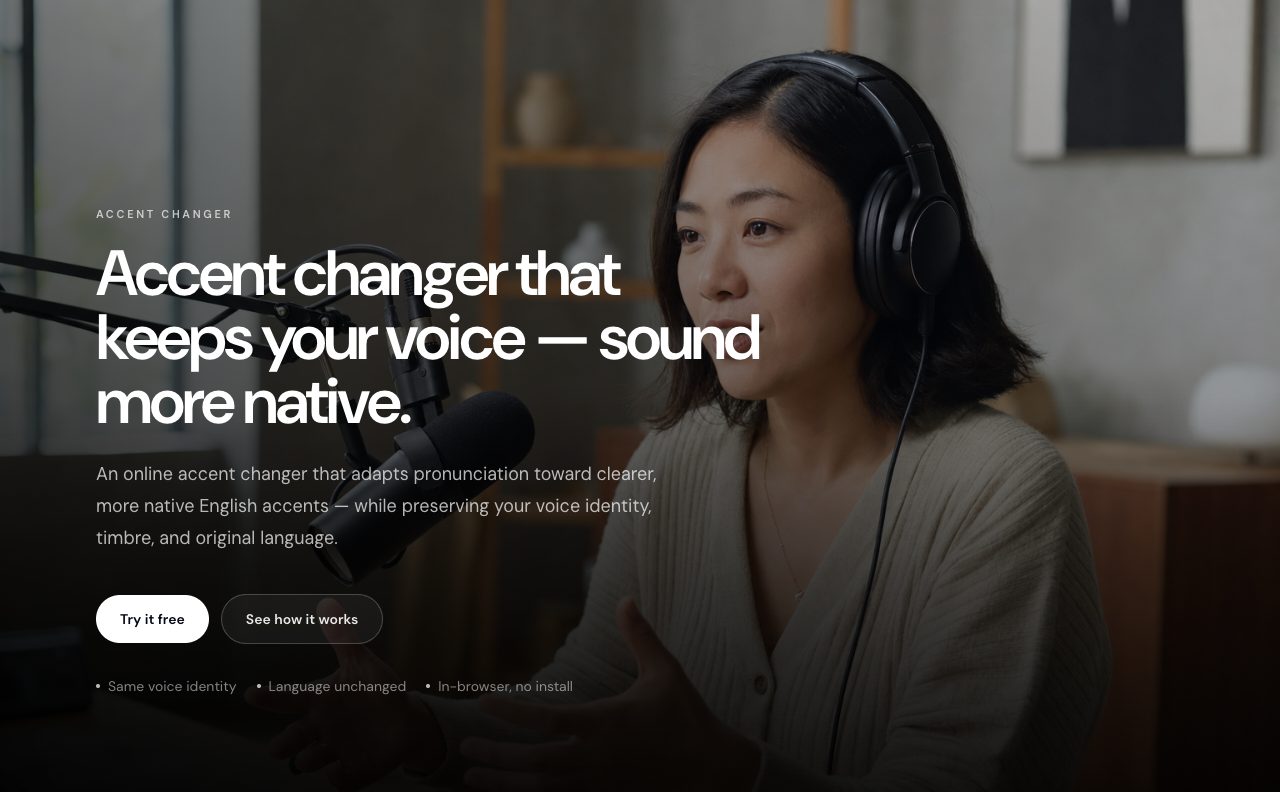
No — not in the way most people mean "cheating." Using an accent converter on your own recording is closer to color grading a video or running a noise filter on a podcast: you are polishing delivery, not pretending to be someone else.
The guilt usually comes from a deeper question: Am I allowed to sound clearer without earning it through years of coaching? That framing treats accent like a moral exam. It is not. Intelligibility is a communication tool — and tools are judged by context, not by purity.
What accent conversion actually does
Speech-to-speech accent converters take audio you recorded and adjust pronunciation toward a target profile — American, British, Australian, and others — while trying to preserve:
- Your timbre and vocal identity
- Your pacing, pauses, and emphasis
- Your words and meaning (same language, same script)
They do not invent a new persona or read text you never spoke. Compare that to hiring a voice actor to re-narrate your course — that replaces you. Conversion keeps you in the file.
When it is clearly fair use
Most ethical tension disappears in content production contexts:
- Podcasts and videos edited for a target market
- Course modules where clarity helps learners follow technical material
- Client deliverables where the brief is understandable English, not accent performance
- Personal practice — hearing your script with clearer stress patterns to guide study
Editors use EQ, compression, and reverb without shame. Accent adjustment is the same class of choice for international creators serving English-first audiences.
Tools like an accent reduction tool exist because millions of fluent English speakers still carry pronunciation patterns that make recorded content harder to follow — not because they lack intelligence or effort.
When disclosure or limits matter
Honesty still counts in specific settings:
| Context | Using a converter |
|---|---|
| Edited YouTube video | Generally fine — all video is post-produced |
| Language exam speaking section | Not appropriate — assesses live ability |
| Job interview (live) | Cannot rely on conversion; practice instead |
| Pre-recorded one-way interview | Often acceptable; check platform rules |
| Audiobook contract | Disclose processing if contract requires raw voice |
"Cheating" applies when you misrepresent a live skill you do not have. It rarely applies when you publish edited media — audiences assume editing.
Cheating vs coaching vs conversion
- Coaching trains live speech over time — high effort, lasting skill. Apps like ELSA Speak score your pronunciation drills and build habits for real conversations.
- Conversion polishes a file in minutes — low effort, no live transfer.
- Voice cloning / TTS replaces your voice — different category entirely.
If you feel uneasy, ask: Would I be comfortable telling my audience I edited audio for clarity? For most creators, the answer is yes — the same way they admit to using a microphone and an editor.
A healthier mindset
Wanting clearer English is not rejecting your background. Many bilingual professionals code-switch daily; conversion is code-switching for a WAV file.
Using accentchanger.com for a course intro does not erase your identity — it meets listeners halfway. You can still teach, interview, and connect in the accent you live in off-camera.
Pair conversion with learning if guilt persists: convert this week's episode, drill one sound pattern you noticed, speak live without shame next week. Progress is not all-or-nothing.
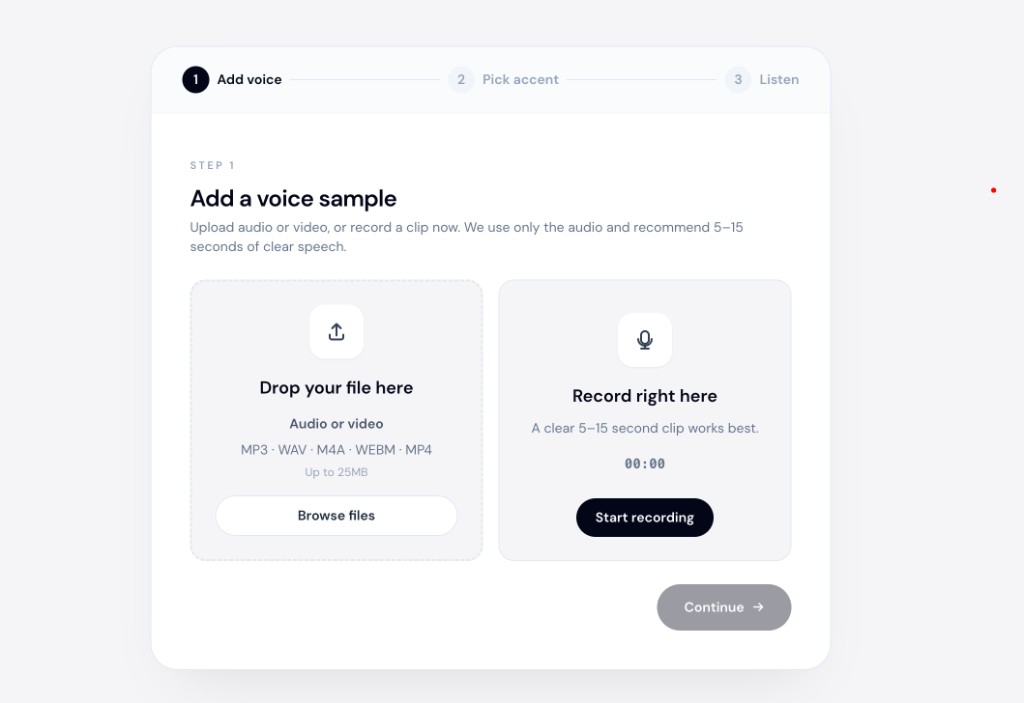
You can reduce accent online on a short sample first — listen, decide whether the output still sounds like you, then choose whether to publish.
Bottom line
Accent converters are not cheating when you use them on your own content to improve clarity — any more than autocorrect is cheating at writing. Be transparent where live skill is tested; be practical everywhere else. Clearer English helps people hear your ideas — and that was the point of speaking in the first place.