What's the difference between accent reduction apps and AI accent converters?
Accent Changer Team
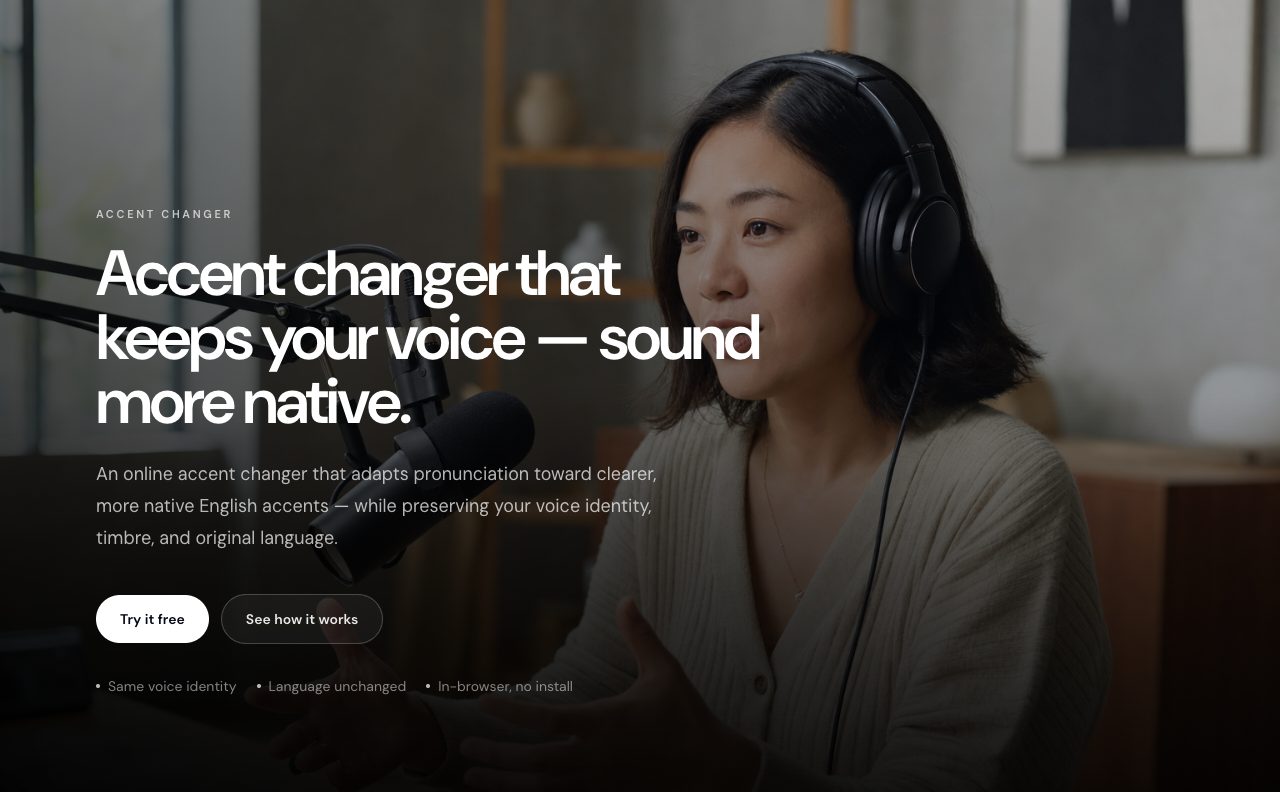
They solve related problems in very different ways. Accent reduction apps focus on training you to speak differently over weeks or months. AI accent converters focus on changing how a recording already sounds — usually in one pass through a browser tool.
Both show up when someone searches for clearer English. Confusing the two leads to frustration: downloading a coaching app when you needed a finished podcast clip, or uploading audio to a converter when you actually wanted live speaking practice.
What accent reduction apps do
Typical accent reduction apps (and connected coaching programs) work like language fitness:
- Daily drills — vowel pairs, consonant clarity, rhythm exercises
- Feedback loops — speech recognition scores your attempts
- Long-term habit change — you retrain muscle memory in your mouth and jaw
- Live speaking focus — the goal is how you sound in the next meeting or call
Apps like ELSA Speak sit in this category: pronunciation coaching with scored drills, designed for daily practice over weeks.
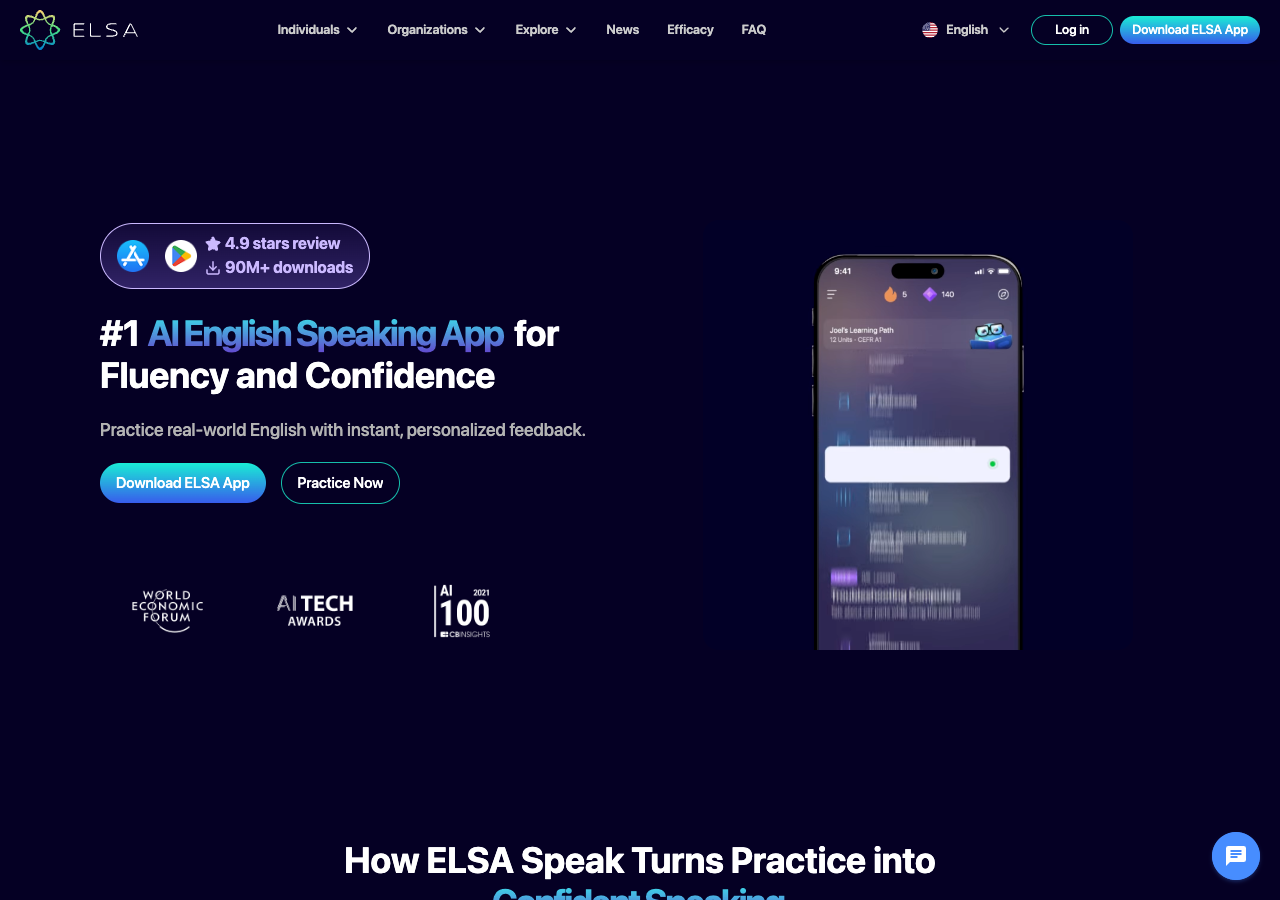
They are strongest when you have time, motivation, and a goal to speak more clearly in real time — not just fix one file.
What AI accent converters do
AI accent converters are post-production tools. You record or upload audio, pick a target accent profile (American, British, Australian, etc.), and the model reshapes pronunciation while trying to keep your timbre and pacing.
- Input: your existing recording
- Output: a new audio file with adjusted delivery
- Timeline: minutes, not months
- Best for: content you can edit before publishing
This is the workflow behind an accent reduction tool used on finished speech — not a substitute for learning to order coffee more clearly in person.
Side-by-side comparison
| Factor | Accent reduction apps | AI accent converters |
|---|---|---|
| Primary goal | Train live speaking | Polish recorded audio |
| Time to results | Weeks to months | Minutes per file |
| Keeps your voice? | Yes — it is you, improved | Yes — same timbre, new delivery |
| Works on old recordings? | No | Yes |
| Live interview help? | Yes, if you practice | Only on pre-recorded answers |
| Typical cost model | Subscriptions, coaching | Per-file or freemium tools |
Neither category is "better" — they target different moments in your workflow.
When to choose which
Pick accent reduction apps if:
- You want clearer English in live Zoom calls, interviews, and client meetings
- You have budget and time for consistent practice
- Your bottleneck is real-time speaking, not editing a video
Pick an AI accent converter if:
- You already recorded a course, podcast, demo, or pitch and want clearer delivery
- You need a US or UK version without re-recording the whole script
- You want to hear a target accent on your own words before committing to coaching
Many professionals use both: coaching for live confidence, conversion for published content.
Content workflow example
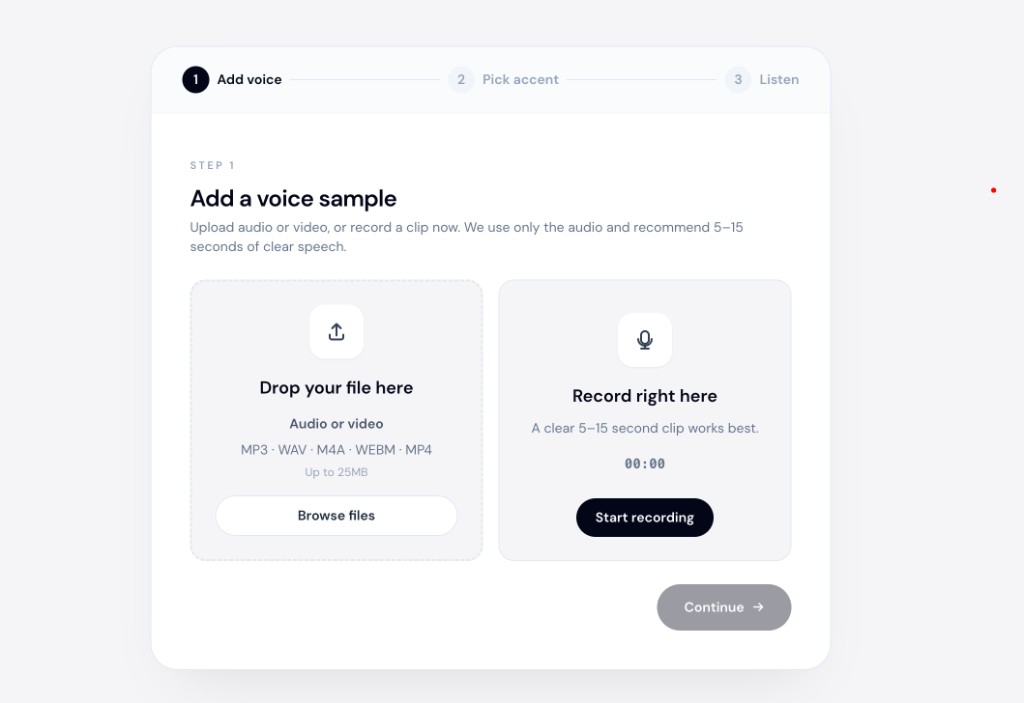
For YouTube intros, course modules, or client Loom videos, accentchanger.com fits the converter path: upload in the browser, choose American or another target profile, preview, and download MP3. You are not replacing months of study — you are shipping a clearer version of a take you already like.
You can also reduce accent online without installing desktop software — useful when you want a quick A/B test on a short clip.
Bottom line
Accent reduction apps train the speaker. AI accent converters reshape the recording. If your problem is "I need this published episode to land better with US listeners," start with a converter. If your problem is "I freeze in live English interviews," start with practice — and use conversion to polish any pre-recorded answers you submit in advance.